Where Culture Leads Climate: Mezu, Infinity Village Lab, and the Power of Local Voices
For our latest TheSharedWorld Spotlight, we are featuring Mezu Ofoegbu, a Nigerian artist-founder of Infinity Village Lab, a creator and sustainability leader who hosted a session at COP30 in Brazil, the first COP hosted in the Amazon.
Infinity Village Lab (IVL) is a creative research & development company. They help organizations unlock meaningful insights that drive measurable behavioral action. At its core, IVL works to build trust between people, institutions, and ecosystems by transforming data, policies, and complex ideas into tech-enabled art and experiences. Through research, storytelling, art interventions, and impact measurement, IVL bridges the gap between information and action, helping communities not just understand systems, but feel their role within them
When global leaders gather at COP, the conversation often centers on policy frameworks, financing mechanisms, and national commitments. Yet beneath the formal negotiations lies a quieter truth. Real climate action is forged in communities and carried through culture.
 For Mezu, attending COP30 in Brazil was not about presence for its own sake. It was about ensuring that local voices, particularly creative ones, are embedded in global decision making spaces. His path to COP began in Stockholm in 2024, where IVL was commissioned by the United Nations Global Innovation Hub to design an art intervention that enabled more than 200 climate and government leaders to collaborate beyond language, bias, and borders. That experience produced sixteen translocal climate solutions, one of which became an official Global Innovation Hub project, and planted the seeds for a lasting relationship with the United Nations.
Being in the Amazon, the world’s most vital ecosystem, reshaped everything. Invited by the Quilombo do Abatacal, Mezu and his collaborators were welcomed through ritual, cleansing, and story. Before entering the village, an elder conducted a ceremonial cleansing to ensure intentions were pure. As an artist, Mezu experienced firsthand how spiritual and ecological narratives are inseparable. Climate justice, in this context, was not abstract. It was embodied, relational, and deeply human.
 Connection unfolded not only through ceremony, but through shared movement, sound, and joy. As Mezu reflects. “We made instant authentic connections from harvesting açaí to wearing out dance floors that stood between English and Portuguese capabilities.Trading respective hometown footworks and chanting ‘They Not Like Us’ by Kendrick Lamar became stark reminders of the power of Atlanta’s arts and culture in catalyzing global communities, which Lamar even makes note of during his third verse.” In moments like these, culture became a bridge. Art collapsed distance and built trust faster than translation ever could.
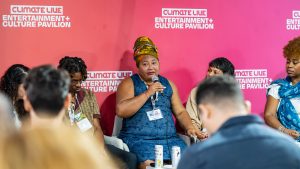
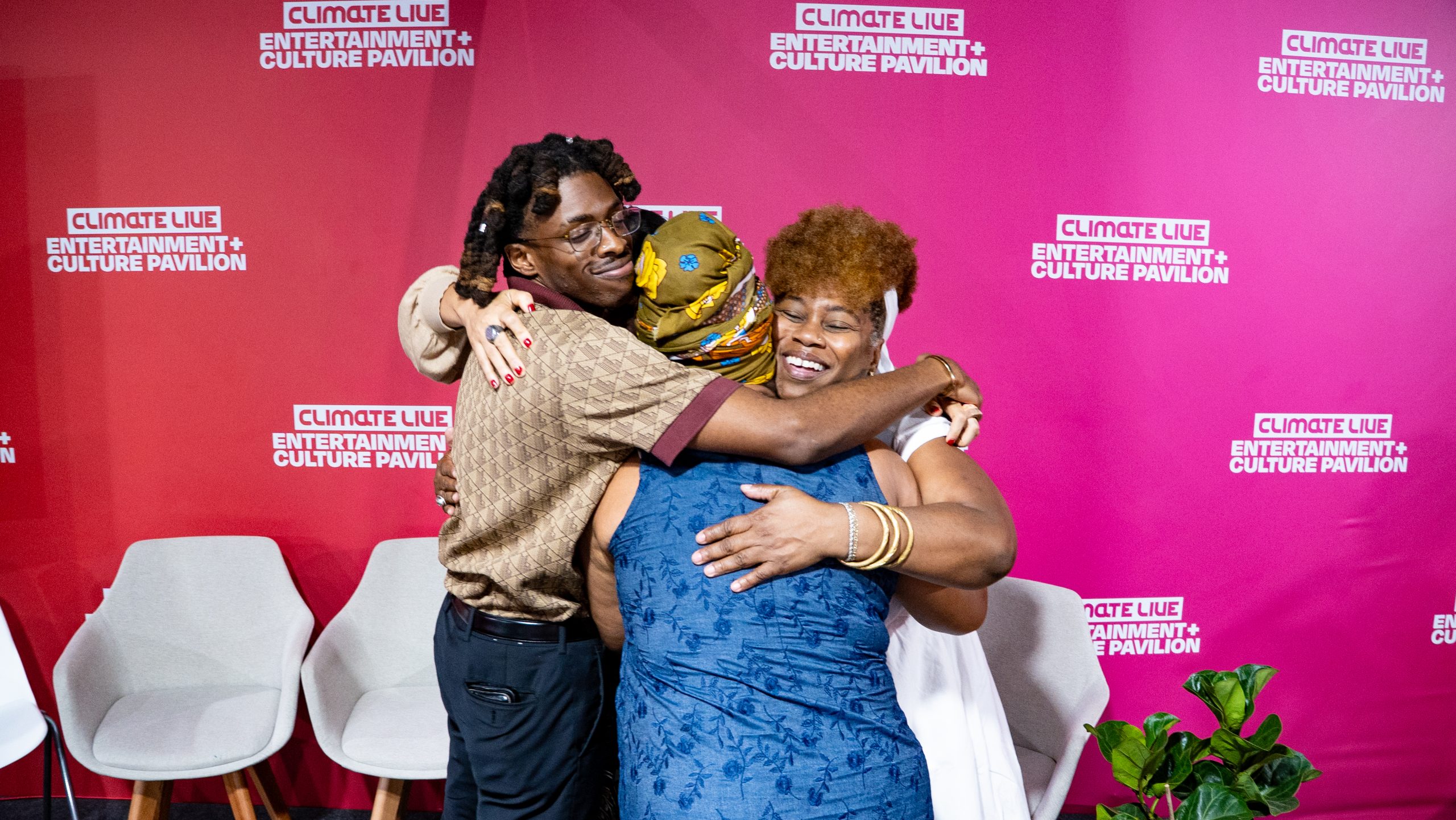
That truth surfaced powerfully during Infinity Village Lab’s session in COP’s official Blue Zone, at The Climate Live and the Entertainment and Culture Pavilion. The session, titled, “Arts Innovation from the South to the Global South” sponsored by Atlanta’s very own Woodruff Arts Center. When Elder Vanusa struggled to find oxygen in her words while recounting a childhood memory, emotion filled the room. Tears followed. No translation was needed.For Mezu, the moment reaffirmed what IVL has long known. Art must be leveraged to scale our most vital capacity for climate action, the ability to feel.The parallels between Belém and Atlanta soon became impossible to ignore. Mezu draws a powerful connection between the Amazon rainforest and Atlanta’s Eastern Continental Divide, an invisible hydrological boundary that shapes the city’s rain patterns, flooding, heat, and health outcomes. The well being of the Amazon directly influences how often it rains in Atlanta, how intense storms become, and how extreme heat affects already vulnerable communities. In a city where heart disease remains the leading cause of death, climate justice in the Amazon becomes inseparable from public health and social equity at home. This is the power of ecological narratives when they are made personal and local.
With COP behind him, Mezu’s work is accelerating. Infinity Village Lab is expanding creative accelerator programs, supporting artists with global reach, collaborating with ministries abroad, and building platforms that strengthen Atlanta’s creative economy. New large scale public art installations and university partnerships are on the horizon, designed to invite participation, imagination, and collective ownership of our shared future.
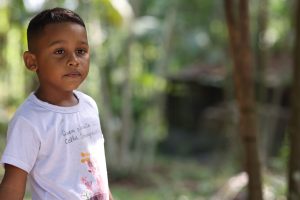 For young artists and community leaders, Mezu offers a clear charge. Art is dangerous, not because it causes harm, but because it demands the existence of possibility. In a moment when unprecedented action is required to ensure livable cities and a just future, creatives must carry and wield that responsibility.At TheSharedWorld, we believe Mezu’s journey underscores a core truth. Local voices are the frontlines of sustainability, and creatives are among our most powerful change agents, translating global urgency into local action, one story at a time. Connect with Mezu and learn more about Infinity Village Lab (IVL) here: https://www.infinityvillagelab.org/
Q&A with Mezu: Culture as a Catalyst for Climate Action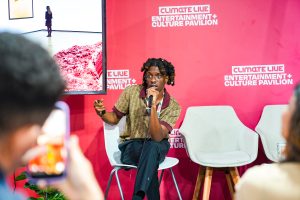
How did you get involved with COP30?
My relationship with the United Nations began in Stockholm in 2024. IVL was commissioned by the Global Innovation Hub to design an art intervention that would seamlessly foster collaboration among over 200 climate and government leaders tasked with overcoming personal biases to design climate solutions that crossed borders. We leveraged embodied communication to bypass the prejudices shaped by language. Relationships deepened nearly immediately. Collaboration became easy. That day produced sixteen translocal solutions—one selected as an official Global Innovation Hub project. The Executive Project Director of the United Nations Global Innovation Hub, Dr. Massamba Thioye, said of our work: “It appeared very clearly that this is the way forward… Here, for the first time, we have the reinvention of the world and the reinvention of ourselves being done together.” Those words became soil. What has grown from them is a fruitful relationship with the United Nations Global Innovation Hub.
COP30 was the first COP hosted in the Amazon. How did being in the world’s most vital ecosystem shape the conversations you had or the way you view climate justice?
Our decision to go to COP in the Amazon was intentional. The Quilombo do Abatacal invited us to visit their community and begin our Global Oral Futures narrative with their stories of community-led resilience. Upon arriving at their Quilombo we were greeted by a elder who conducted a ritualistic cleansing before we could enter the village land. We passed under an covered gate to ensure our intentions were pure. As an artist, the intersection of spiritual ad ecological narratives are clearly seen by the Amazon’s landscapes and its indigenous customs. Characterized by its functions for the people of Quilombo do Abatacal and the planet at large, personalizing the Amazon’s ecological traits were and are essential to inspiring global communities to local behavioral action.
We made instant authentic connections from harvesting acai to wearing out dancefloors that stood between English and Portuguese capabilities. Trading respective hometown footworks and chanting “They Not Like Us” by Kendrick Lamar became stark reminders of the power of Atlanta’s arts and culture in catalyzing global communities, which Lamar even makes note of during his third verse.Then there was our session in the official Blue Zone, hosted by Climate Live and the Entertainment & Culture Pavilion, two international giants driving arts and culture for climate change. Laila Martins, a dear friend and global organizer is undoubtedly the best translator I’ve ever witnessed, she transcribed paragraphs of thought into spot-on reflections across both Portuguese and English. What proved future-ready was a critical moment in Elder Vanusa’s story. She spoke in Portuguese recalling a childhood memory that informs the work she is doing today. Elder Vanusa began to fight to find the oxygen in her words. Sitting just beside her, I saw her cheek tremble with effort. Her first tear fell. Seconds later, multiple eyes on the panel and in the audience began to tear. A countless few fell. Our brains didn’t need translators to feel, to act. That fact surfaced what we at IVL know: art must be leveraged to scale our most vital ability to drive global behavioral action—to feel.
From Quilombo communities in Belém to neighborhoods in Atlanta, what parallels do you see in the fight for climate resilience and social justice?
In our art practice at IVL, we recognize that ecological narratives shape social significance and connectedness. Consider the Eastern Continental Divide—an invisible hydrological boundary separating waters flowing to the Atlantic Ocean from those flowing to the Gulf of Mexico. The ECD flows right through Atlanta. The social significance and connectedness this ecological narrative has shaped include Atlanta’s railway—Terminus—significant for its founding as a rail hub connecting Southern and Northern lines, and Atlanta’s airport, significant for being the world’s busiest for decades and a crucial hub connecting the U.S. to the world.
The well-being of the Amazon rainforest significantly affects the flow of the Eastern Continental Divide through its influence on atmospheric moisture and water cycle patterns. Connecting ecological narratives becomes a key lever for finding shared desired realities across cultures. In this case, deforestation of the Amazon means: how often it rains in Atlanta, how intense storms become, how dry and hot summers are. In Atlanta, when it rains, it floods. On hot days, hearts work harder. With heart disease being the number one cause of death in Atlanta, this connects activism in the Amazon to protecting vulnerable communities and weak hearts in our backyard. This is what we mean by leveraging ecological narratives to shape social significance and drive global community connectedness.
Now that COP30 is behind you, what is next for HEALIX, for Infinity Village Lab, and for the communities you serve?
COP is behind us, but our work with Quilombo do Abatacal has just begun. Q4 was catalytic. One of our Accelerator Artists had a movie release on Apple TV this month, we were commissioned by the Ministry of Arts & Culture in Nigeria, and we’re rolling out a new program next year that will scale how we help creators in Atlanta achieve their wildest imaginations. Put plainly, were excited to be the engine for producing Atlanta’s top creative innovation talent, and what that means for the health of Atlanta’s creator economy and creative workforce. As it relates to our work empoweing students, we’re excited to be installing large-scale public art installations and bringing brand new experiences to a few universities here in the U.S. Lastly, we can help but look ahead feeling deeply supported by our local and international communities and are excited to scale this reality, to make this feeling tangible for every person who visits Atlanta.
If you could leave young artists or community leaders with one message from your COP journey, what truth do you hope they carry with them?
At this year’s COP30, global community was the only entity that got anything done. We took a measurable step at interlocking, organizing, deploying capital, and making radical decisions toward collective action to ensure that the planet and its people are being thought after. To young artists and community leaders, I echo Toni Morrison’s caution to understand that art is dangerous, and to know that going in. Its danger isn’t in its ability to make bad things happen, but in its ability to demand the existence of possibility. It is this demand of possibility that inspires unprecedented action. In a time when unprecedented action is what the world needs to ensure that parts of this country remain liveable in our lifetime, artists and community leaders must carry and wield the weight of inspiring unprecedented action.